

13 GLP-1 Side Effects No One Fully Explains (Semaglutide & Tirzepatide) And How to Prevent Them
Now let’s talk through this calmly and clearly.
You’ve probably seen the posts.
Someone’s cousin “ended up in the ER.” A TikTok video about sulfur burps was so bad that she couldn’t leave the house. Comment sections are full of people swearing off semaglutide forever after one rough week. Social media loves drama. It is not great at nuance.
And if you’re a woman in your 40s or 50s who already feels like your body has been working against you, stubborn weight that won’t budge, exhaustion, hormones doing whatever they want, the last thing you need is another unpredictable problem on your plate.
Let’s slow this down.
GLP-1 medications like semaglutide and tirzepatide are genuinely powerful metabolic tools. They work. They help regulate appetite, improve blood sugar control, reduce inflammation, and support real, sustainable fat loss. I’ve seen them change lives in my practice. But they do come with side effects, and here’s what most people aren’t told:
Those side effects aren’t random. They’re physiological. Meaning your body is responding exactly as expected to a medication that changes how your digestive system works. Once you understand why they happen, they stop feeling scary and start feeling manageable.
What Is Actually Happening in Your Body on a GLP-1
GLP-1 medications work by mimicking a hormone your body naturally produces. That hormone does three main things: it reduces your appetite, improves your blood sugar control, and slows down gastric emptying. That last one is the important one.
Slowing gastric emptying simply means food stays in your stomach longer. That’s why you feel full after just a few bites. That’s also why GLP-1 side effects like nausea, constipation, bloating, and reflux can occur, because when digestion slows, everything downstream slows with it. Your gut motility changes. Fat digestion shifts. Bowel movements become less frequent.
None of this is a malfunction. This is exactly how semaglutide and tirzepatide work.
The other major factor is titration, which just means increasing your dose gradually so your body has time to adapt. When titration is rushed, GLP-1 side effects spike. When it’s done thoughtfully and under supervision, most patients tolerate these medications very well. This is one of the core reasons supervised medical weight loss makes such a difference. We’re not just handing you a pen and sending you home.
The 13 Most Common GLP-1 Side Effects And What To Do About Them
Each of these has a cause. And each has a solution. Let’s walk through them.
1. Nausea on Semaglutide or Tirzepatide
This is the most common GLP-1 side effect, especially during the first few weeks. Because food stays in your stomach longer, that unfamiliar fullness can feel like nausea while your body adjusts. It makes complete sense physiologically, and for most patients, it’s temporary.
Large meals, high-fat foods, skipping meals, and dehydration all make GLP-1 nausea worse. Smaller portions, lean protein, steady hydration, avoiding greasy food during the adjustment period, and a gentle walk after meals usually help significantly. When titration is gradual, nausea typically improves within a few weeks.
2. GLP-1 Constipation
Constipation is one of the most frequent semaglutide side effects I see in practice. Slower digestion naturally means slower bowel movements, and this one catches people off guard because they’re prepared for appetite changes, not a shift in their whole digestive timeline.
Low water intake, low fiber, inactivity, and under-eating all intensify GLP-1 constipation. More water, more vegetables and berries, daily walking, and sometimes magnesium under medical guidance usually resolves it. Constipation is not a reason to panic. It’s feedback from your digestive system. It’s a signal to adjust.
3. Bloating on GLP-1 Medications
When food sits longer in the stomach, gas can build up. Carbonated drinks, processed foods, and large meals are the biggest triggers. Eating slowly, spreading meals out, and reducing carbonation often make a noticeable difference fairly quickly.
4. GLP-1 Sulfur Burps
Okay, let’s talk about this one because nobody warns you about it, and it can be genuinely embarrassing. Sulfur burps happen when food ferments longer in the stomach, and high-fat, fried, or fast food is the main culprit.
The good news? When patients reduce processed and greasy foods and shift toward lean protein and whole foods, this one often disappears quickly. Diet cleanup makes a real difference here.
5. Early Fullness
Feeling full after just a few bites is expected on a GLP-1 weight loss medication, and it’s actually the medication doing its job. But this is where I see a lot of women make a dangerous mistake.
Decades of diet culture have trained us to believe that eating less is always better. So when semaglutide makes it easy to survive on almost nothing, it can feel like success. It’s not. Under-eating increases GLP-1 side effects, accelerates muscle loss, worsens fatigue, and slows your metabolism. Smaller meals are completely fine. Starving your body is not.
6. Headaches
GLP-1 medications don’t directly cause headaches. Dehydration and low blood sugar from skipping meals do. Hydrate consistently, add electrolytes if needed, and don’t skip meals. That’s usually all it takes to resolve this one.
7. Fatigue
Rapid calorie reduction can leave you running on empty. And if you’re losing muscle mass along with fat, which happens when you don’t eat enough protein, that fatigue compounds quickly.
This is why I always emphasize protein goals and resistance training, not just for aesthetics, but because muscle is metabolically protective. Adequate protein intake and resistance training two to three times weekly are essential during medical weight loss. Fat loss without muscle preservation isn’t a success story.
8. Acid Reflux
Slower gastric emptying increases stomach pressure, which can push acid upward. Large meals, lying down after eating, and high-fat foods all make this worse. Staying upright for at least an hour after meals and reducing fatty foods, especially in the evenings, often improves symptoms significantly.
9. Diarrhea
Although GLP-1 constipation is more common, diarrhea can occur. High-fat meals, artificial sweeteners, and rapid dose escalation are frequent triggers. Adjusting your diet and slowing titration typically resolves this one.
10. Hair Shedding During Rapid Weight Loss
This one surprises people, and it’s important to understand that hair shedding is not caused by semaglutide or tirzepatide directly. It’s caused by rapid weight loss. When your body sheds pounds quickly, it temporarily shifts energy away from non-essential functions, and hair growth is one of them.
Adequate protein and slow, steady fat loss reduce this risk significantly. Another reason we don’t push for extreme, fast weight loss.
11. Gallbladder Issues
Rapid fat loss from any cause, not just GLP-1 medications, increases the risk of gallstones. Gradual weight reduction, balanced nutrition, and medical supervision all lower that risk. This is another reason we don’t chase extreme or rapid weight loss in our practice.
12. Muscle Loss
This one matters deeply, and I want you to really hear it. When you don’t eat enough protein, your body doesn’t just burn fat. It breaks down muscle to use for energy. Muscle protects your metabolism, your insulin sensitivity, and your long-term health as you age. This is not a number-on-the-scale issue. This is a body composition issue.
Protein at every meal and resistance training two to three times weekly are non-negotiables when you’re on a GLP-1 medication for weight loss. This is exactly why supervised medical weight loss programs focus on body composition, not just the scale.
13. Pancreatitis Risk
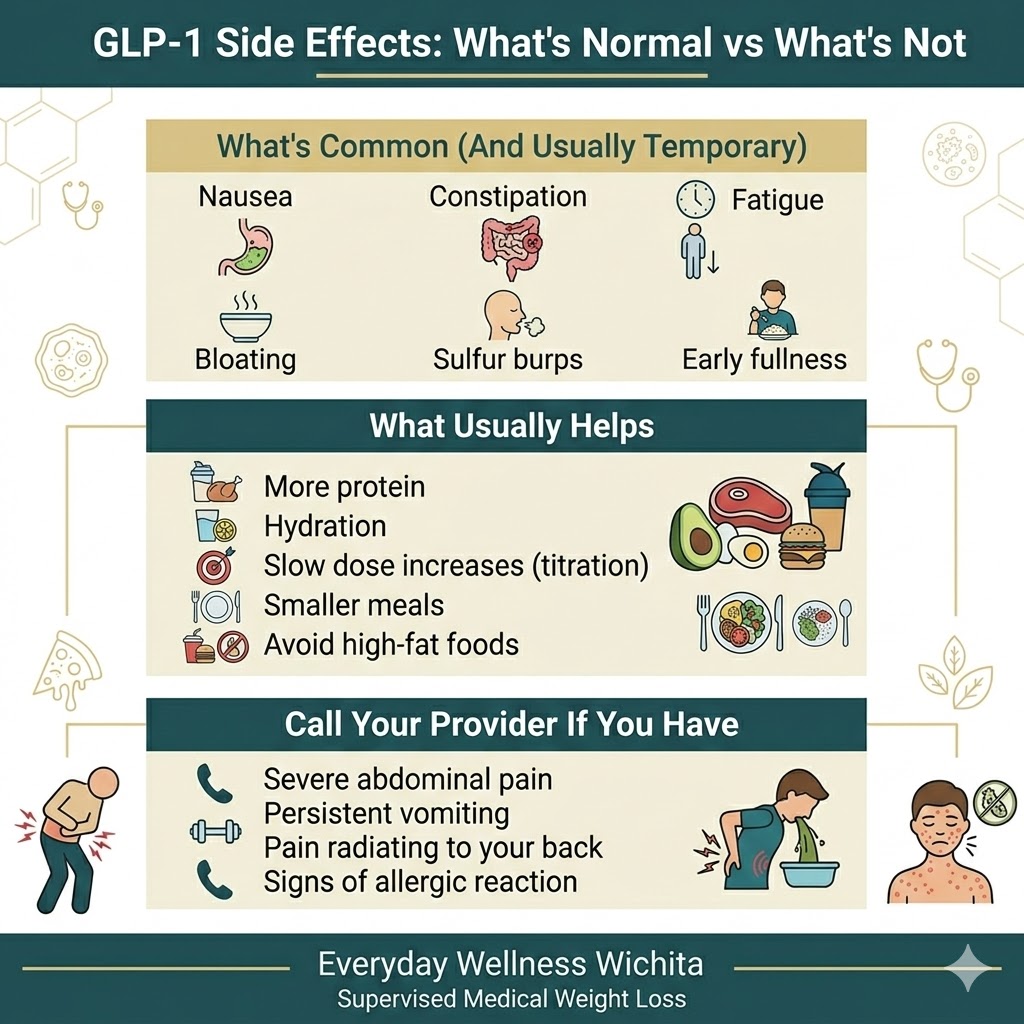
This is rare. I want to say that clearly. But it is serious, and it’s worth knowing the signs: severe upper abdominal pain, pain that radiates to your back, and persistent vomiting. If you experience those symptoms, call your provider immediately. We include this not to scare you, but because you deserve complete information.
The Biggest Mistake I See Patients Make
Trying to eat as little as possible.
I get it. Decades of diet culture have told women that restriction equals success. The less you eat, the faster you’ll lose. So when semaglutide or tirzepatide makes it easy to survive on almost nothing, it feels like a win.
It’s not. When you under-fuel on a GLP-1 medication, side effects intensify, muscle loss accelerates, fatigue gets worse, your hair sheds more, and constipation worsens. This medication is not a starvation tool. It’s a metabolic regulator. It works with your body, but only if you give your body what it needs to function.
How to Reduce GLP-1 Side Effects: 14 Practical Strategies
Reducing GLP-1 side effects is less about hacks and more about consistency. Here’s what we actually coach our patients on at Everyday Wellness. These aren’t vague suggestions. They’re the things that make the real difference.
Hit your daily protein goal. This is the non-negotiable.
Drink water consistently throughout the day, not just when you’re thirsty.
Add electrolytes if you’re feeling headachy or run down.
Increase your dose slowly through proper titration. Don’t rush it.
Eat smaller, more frequent meals, especially in the first few weeks.
Avoid high-fat meals during your adjustment period.
Limit carbonated drinks. They make bloating significantly worse.
Walk for 10 minutes after meals to support digestion.
Lift weights two to three times weekly to protect your muscles.
Avoid lying down after eating. Stay upright for at least an hour.
Rotate injection sites to reduce irritation.
Limit alcohol, especially during dose increases.
Track your bowel movements so you can catch constipation early.
Monitor body composition, not just scale weight.
If you want a deeper breakdown of the daily habits that make GLP-1 medications easier to tolerate, I also wrote a full guide on how to prevent side effects while still losing weight.
You can read it here: How to Avoid GLP-1 Side Effects While Still Losing Weight → That article walks through protein targets, hydration goals, and movement strategies in even more detail.

Why Some People Struggle More Than Others
If you’re having a harder time than someone else you know who’s on the same medication, it’s not because you’re more “sensitive.” It’s usually about preparation and starting conditions.
Chronic dieters tend to struggle more because years of restriction leave your metabolism and gut less resilient. Low muscle mass means your body has less metabolic buffer. Dehydration going in makes everything harder. High processed food intake inflames your gut before you even start. And rapid dose escalation without supervision is one of the most common reasons people have a miserable experience on semaglutide or tirzepatide when they absolutely didn’t have to.
Preparation matters more than people realize. What you do before and during treatment shapes the entire experience.
Rare But Serious Symptoms That Require Medical Attention
Most GLP-1 side effects are manageable. But there are a few things I always want my patients to watch for:
Severe abdominal pain that doesn’t resolve.
Persistent vomiting you can’t manage at home.
Pain radiating to your back combined with nausea, which can be a sign of pancreatitis.
If any of those happen, call your provider. Not tomorrow. These are not common, but they are not something we ignore.
The Emotional Side of GLP-1 Fear
I want to talk about something that doesn’t get enough airtime: the shame.
A lot of women come to me worried that choosing a GLP-1 medication means they’ve given up. That they’re cheating somehow. That people will judge them for not losing weight “the right way.”
Let me be direct with you. If your body is insulin-resistant, inflamed, and hormonally dysregulated, addressing that medically is not cheating. It is treatment. You wouldn’t tell someone with high blood pressure to just try harder and skip the medication. Weight and metabolic health are no different.
You are not weak. You are addressing physiology. And you deserve to do that with real support, not shame.
What’s Possible When It’s Done Right
When GLP-1 medications are paired with adequate protein, resistance training, proper hydration, and gradual titration, the results are genuinely different from anything my patients have experienced before.
Sustainable fat loss that doesn’t come at the expense of muscle. Reduced inflammation. Improved blood sugar control. Better energy. More confidence. Women who tell me they finally feel like themselves again.
That’s what’s available to you when it’s done thoughtfully.
The Cost of Doing Nothing
I also want to gently push back on the idea that avoiding treatment is the safe choice.
Continued weight gain stresses your joints, your blood sugar, your hormones, and your heart. Insulin resistance doesn’t stay stable. It progresses. The emotional toll of feeling stuck in a body that won’t cooperate, despite everything you’re trying, is real, and it matters.
Making decisions out of fear of side effects is understandable. But avoiding treatment entirely because of fear you saw on social media is a different thing. You deserve accurate information. You deserve to make this decision from a clear, grounded place.
Quick Summary: Managing GLP-1 Side Effects
Most GLP-1 side effects, including nausea, constipation, bloating, sulfur burps, fatigue, and reflux, are related to slowed digestion. With proper protein intake, hydration, gradual dose increases, and medical supervision, semaglutide and tirzepatide are generally well-tolerated and effective for long-term weight management.
You Don’t Have to Figure This Out Alone
You don’t have to choose between losing weight and feeling well. You deserve structure, supervision, and a plan that actually makes sense for your body.
At Everyday Wellness Wichita, we don’t just prescribe semaglutide or tirzepatide and send you home. We build a personalized plan that protects your metabolism, preserves your muscle, and supports you through every phase of the process. If you’re looking for supervised medical weight loss in Wichita, or if you’re already on a GLP-1 and struggling with side effects, let’s talk.
You’re not broken. Your body is responding to signals. Let’s make sure those signals are supported the right way.
Book your consultation: https://everydaywellnesswichita.com/contact
📞 Call us: (316) 391-3465
Everyday Wellness Wichita • 5112 E Central Ave, Wichita, KS 67208
Medical Weight Loss • Bio-Identical Hormone Replacement Therapy (BHRT) • Hair Restoration • Allergy Management